Electric vs Pneumatic vs Hydraulic Actuators: Which Should You Use?
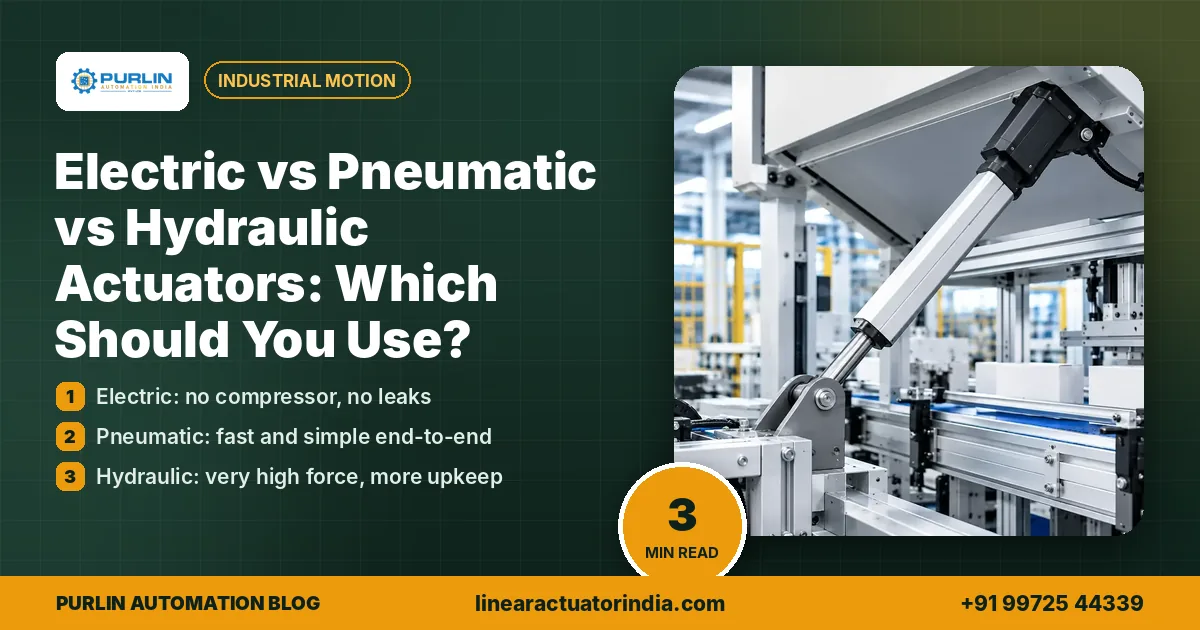
Pneumatic and hydraulic cylinders have moved machines for decades, and they still have their place. But for many jobs an electric linear actuator is simpler to install, cheaper to run and easier to control. Here is an honest comparison to help you decide.
- Electric: no compressor, no leaks
- Pneumatic: fast and simple end-to-end
- Hydraulic: very high force, more upkeep
How each one works
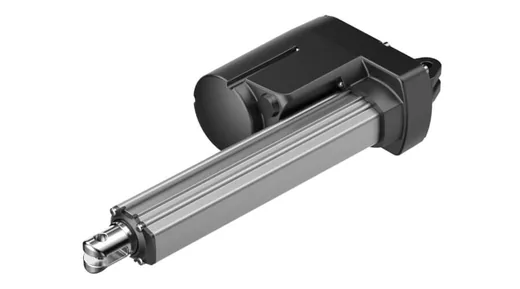
- Electric linear actuator: a DC motor turns a gearbox and lead screw, which pushes a rod in and out. It needs only a power cable and a control signal.
- Pneumatic cylinder: compressed air pushes a piston. It needs a compressor, air lines, filters, regulators and valves.
- Hydraulic cylinder: pressurised oil pushes a piston. It needs a pump, tank, hoses, valves and oil maintenance.
Side-by-side comparison
| Electric | Pneumatic | Hydraulic | |
|---|---|---|---|
| Force | Low to high (Purlin: 100–8000 N) | Low to medium | Very high |
| Speed | Slow to fast (3–400 mm/sec) | Very fast | Slow to medium |
| Position control | Easy, any point in the stroke | Mainly end to end | Possible, with servo valves |
| Holding position | Holds when power is off (self-locking screw) | Drifts if air leaks | Can drift through valve leakage |
| Installation | Power cable only | Compressor and air lines | Pump, tank and hoses |
| Energy use | Only while moving | Compressor runs and leaks waste energy | Pump losses |
| Maintenance | Very low | Leaks, filters, water drain | Oil, seals, leaks |
| Cleanliness | Clean | Clean but noisy exhaust | Oil leak risk |
| Duty cycle | Limited (Purlin standard: 10%) | Continuous | Continuous |
Where electric actuators win
- Machines that move occasionally and hold a position: beds, desks, recliners, hatches, dampers, solar trackers and adjustable fixtures.
- Anywhere without compressed air: outdoor sites, mobile equipment, homes and hospitals.
- Applications that need accurate or repeatable positions: with a feedback signal, an electric actuator can stop at any point in its stroke.
- Clean environments: food handling, medical and office use, where oil or air exhaust is unwelcome.
Where pneumatics or hydraulics are still better
- Very fast, continuous cycling, such as a pick-and-place pusher moving every two seconds all shift. Pneumatics is simple and has no duty cycle limit.
- Very high forces beyond what a compact electric actuator can give, such as presses and heavy earth-moving equipment, where hydraulics is the normal choice.
- Plants that already have compressed air and need a simple end-to-end motion.
The real cost: running, not buying
An air cylinder is often cheaper to buy than an electric actuator. But compressed air is one of the most expensive forms of energy in a factory: the compressor must run continuously to keep pressure, and small leaks waste energy all day. An electric actuator only uses power while it moves and holds its position for free. Over a few years, total cost often favours electric, especially for low-cycle applications.
Thinking of switching?
When replacing a cylinder with an electric actuator, check three things: the peak force, the cycle time (does it fit within the duty cycle?) and the mounting dimensions. Our selection guide article walks through the sizing, and our team can check your cycle times. Send us the cylinder size, air pressure and cycle and we will suggest a matching model.
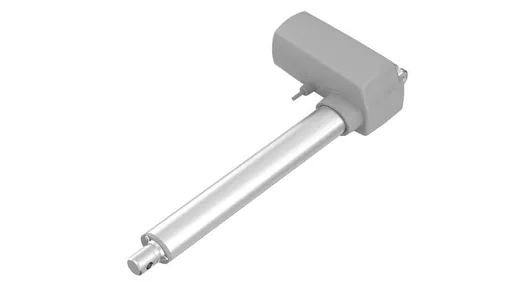
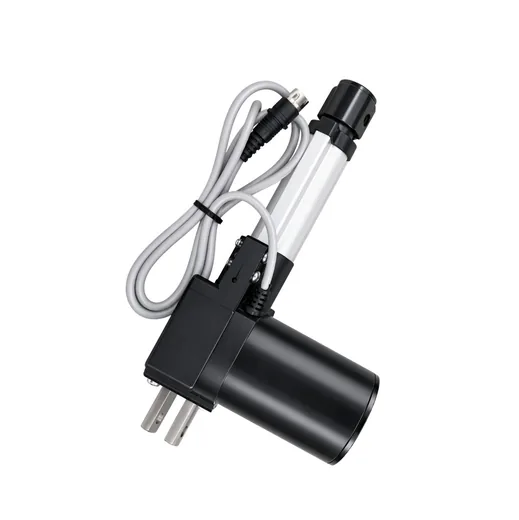
Products mentioned in this article
Made in Bengaluru. Click a product for full specifications, drawings and datasheets.
Frequently asked questions
Is an electric actuator better than a pneumatic cylinder?
For applications that move occasionally, need to hold a position or have no compressed air supply, electric actuators are usually simpler and cheaper to run. For very fast continuous cycling, pneumatics is often better.
Do electric linear actuators hold position when the power is off?
Most lead-screw actuators are self-locking, so they hold their position without power. Pneumatic cylinders can drift when air leaks.
Can an electric actuator replace a hydraulic cylinder?
Yes, when the force is within the electric actuator's rating. Purlin actuators go up to 8000 N. Very high-force applications still usually need hydraulics.
Related pages
Send us your load, stroke, speed and how often it moves. Our engineers in Bengaluru will recommend a model and send a quotation.
Send an inquiry