IP Ratings for Linear Actuators: IP54 vs IP65 vs IP66 Explained
An IP rating tells you how well an actuator keeps out dust and water. Choosing the right one matters most outdoors and in wash-down areas, where water getting into the motor or gearbox is the main cause of failure.
- 1st digit = dust, 2nd digit = water
- IP54: indoor, dust and splashes
- Mount rod down outdoors, add a cover
How to read an IP code
IP stands for "Ingress Protection" and is defined in the IEC 60529 standard. The code has two digits:
- First digit (0–6): solids and dust. 5 means dust-protected (some dust may enter but not enough to stop it working). 6 means dust-tight.
- Second digit (0–9): water. 4 means protected against splashing from any direction. 5 means water jets. 6 means powerful water jets. 7 means temporary immersion.
Common ratings for actuators
| Rating | Dust | Water | Typical use |
|---|---|---|---|
| IP44 | Objects over 1 mm | Splashes | Dry indoor equipment, power supplies inside furniture |
| IP54 | Dust-protected | Splashes from any direction | Furniture, beds, desks, indoor machines, covered outdoor use |
| IP65 | Dust-tight | Low-pressure water jets | Outdoor equipment, agriculture, light wash-down |
| IP66 | Dust-tight | Powerful water jets | Exposed outdoor sites, vehicles, heavy wash-down |
Purlin's standard linear actuators are IP54. Our power supplies are available from IP44 up to IP66.
IP54 is right for most indoor uses
Beds, recliners, desks, cabinets and most factory machines see dust and the odd splash, never jets of water. IP54 handles that well, and it keeps the actuator compact and affordable.
Using actuators outdoors
Outdoor use brings rain, dust, sun and big temperature swings. Day-night temperature changes cause "breathing": the actuator draws in moist air as it cools, and condensation can build up inside. To get a long life outdoors:
- Choose the right rating for direct exposure, or shelter an IP54 unit under a cover.
- Mount the rod pointing down where possible, so water runs off instead of collecting at the rod seal.
- Use a drip loop in the cable so water does not run along it into the actuator.
- Shade it from direct sun, which heats the motor and ages plastics and seals.
- Seal cable joints in an outdoor-rated junction box.
For solar trackers specifically, see Linear actuators for solar trackers.
Wash-down and food areas
In food processing, equipment is often cleaned with water jets and cleaning chemicals. This needs at least IP65, and often IP66, plus materials that resist the cleaning agents. Tell us about the cleaning method when you send an inquiry so we can confirm whether a standard or special build is needed.
Two common misunderstandings
- "IP67 means it's better at everything." Not necessarily. Immersion (IP67) and water-jet (IP66) tests are different. A unit can pass one and not the other.
- "A higher rating lasts forever outdoors." The rating is tested when new. UV, heat cycling and seal wear reduce protection over time, so good mounting still matters.
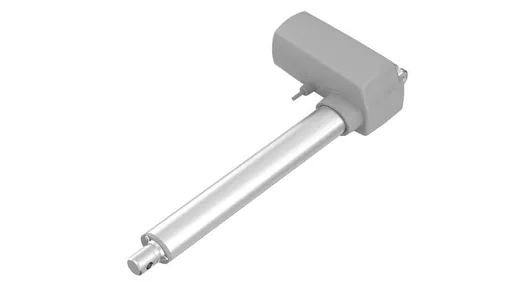
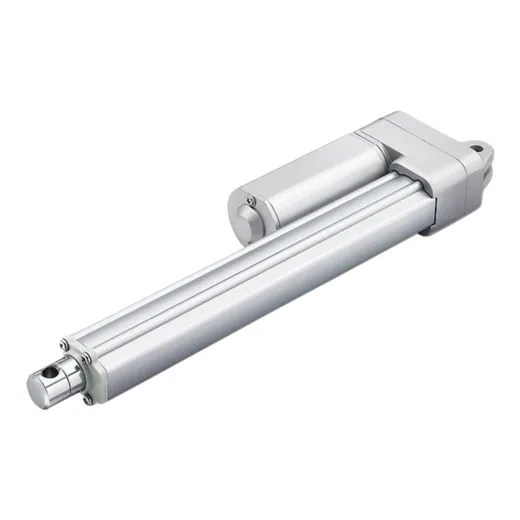
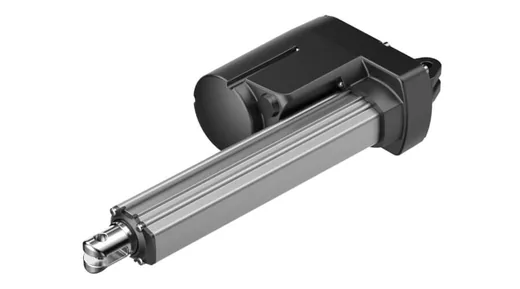
Products mentioned in this article
Made in Bengaluru. Click a product for full specifications, drawings and datasheets.
Frequently asked questions
What does IP54 mean for a linear actuator?
IP54 means the actuator is protected against dust (enough to keep it working) and against water splashing from any direction. It suits indoor and sheltered use.
Can an IP54 actuator be used outdoors?
Yes, if it is sheltered from direct rain and water jets, for example under a cover, mounted rod-down and with a drip loop in the cable. Direct exposure needs a higher rating.
What is the difference between IP65 and IP66?
Both are dust-tight. IP65 is tested with low-pressure water jets, IP66 with powerful water jets.
Related pages
Send us your load, stroke, speed and how often it moves. Our engineers in Bengaluru will recommend a model and send a quotation.
Send an inquiry