Linear Actuators for Solar Trackers: Sizing and Installation Tips
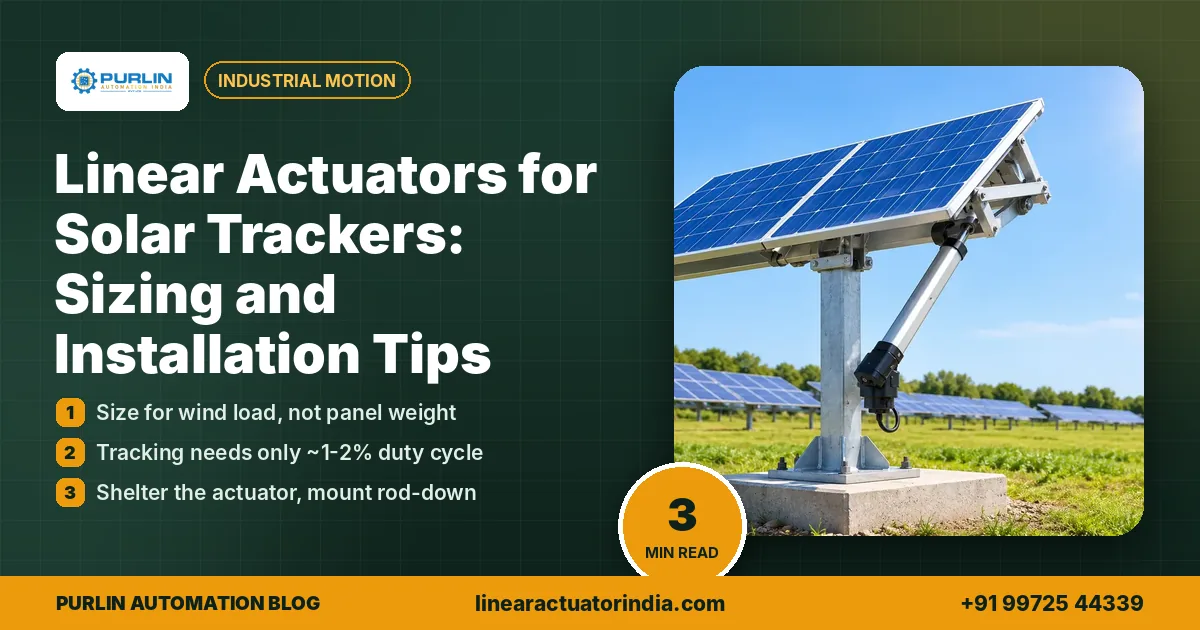
A solar tracker turns panels to follow the sun, and can produce noticeably more energy than a fixed mount. Many small and medium trackers use an electric linear actuator to tilt the panels. Here is what to consider when you choose one.
- Size for wind load, not panel weight
- Tracking needs only ~1-2% duty cycle
- Shelter the actuator, mount rod-down
Why linear actuators suit solar trackers
- They hold position without power. The self-locking lead screw keeps the panel still between moves, so no energy is used to hold it.
- Movements are short and infrequent. A tracker moves a few millimetres every few minutes, which suits a 10% duty cycle easily.
- Simple wiring. A 24VDC actuator can run from the same DC system as the controller, with no hydraulics or air.
Size the force for wind, not just weight
The panel's weight is only part of the load. Wind pressure on a large panel area can create forces many times higher, and the actuator must hold against gusts without being forced back. When sizing:
- Calculate the moment from the panel weight about the pivot.
- Add the wind load for your site's design wind speed and the panel area.
- Convert the moment to actuator force using the actuator's lever arm. A longer lever arm means less force but a longer stroke.
- Add a safety margin, and check the actuator's holding (static) load as well as its moving load.
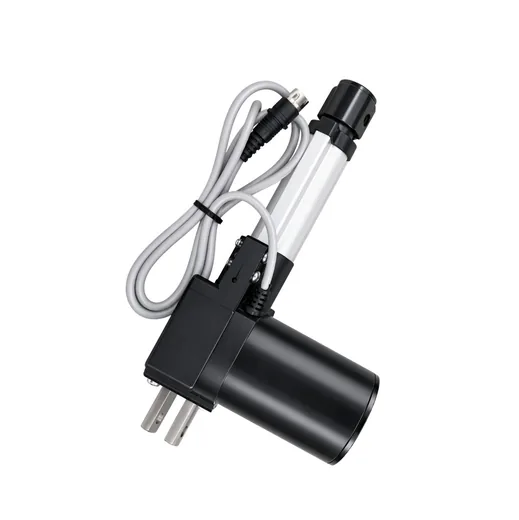
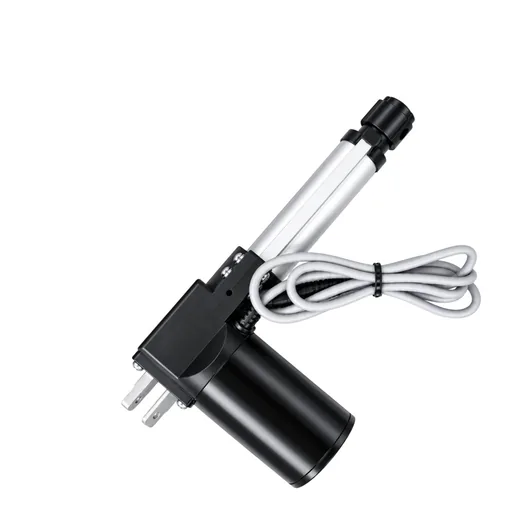
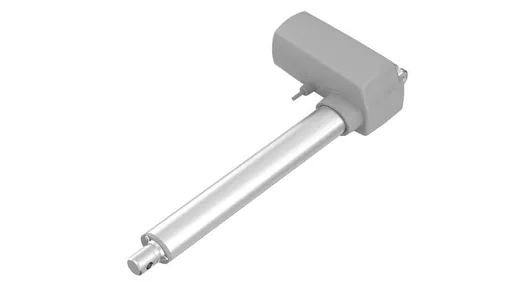
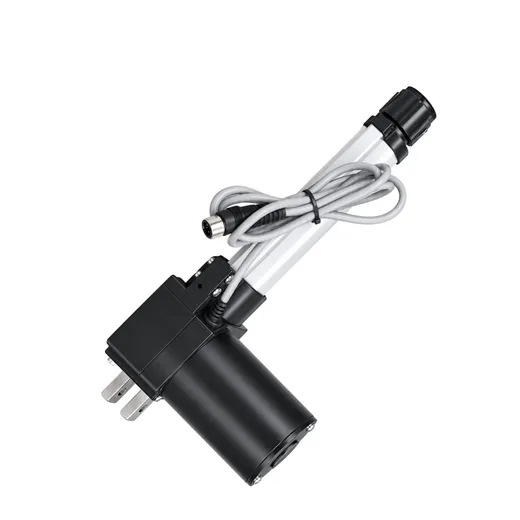
For heavy panel rows, high-force models such as the PAI-01-V1 (6000–8000 N, strokes up to 1500 mm) or PAI-01-V2 (4000 N, strokes up to 1500 mm) are common choices. Slow speed is not a problem here: a tracker never needs to move quickly.
Stroke sets the tilt range
The stroke, together with the mounting geometry, decides how far the panel can tilt. Draw the mechanism at both end positions (for example, east morning and west evening, plus a flat "stow" position for storms) and measure the actuator length at each. The difference is your stroke, plus a small margin at each end.
Duty cycle is rarely a problem
A tracker that adjusts for 8 seconds every 10 minutes runs at about 1.3% duty cycle, far below the 10% rating. The exception is the stow move before a storm, which may be a long continuous run. Make sure that single long move, plus the return, stays within the actuator's limits. See Duty cycle explained.
Protect it from the weather
Trackers are outdoors for years, in sun, rain and dust. Our standard actuators are IP54, so for tracker use:
- Fit a cover or shield over the actuator body.
- Mount the rod pointing down where the geometry allows.
- Use UV-resistant cable and conduit, with a drip loop.
- Keep the actuator away from standing water.
More detail is in IP ratings for linear actuators.
Control and feedback
Trackers are usually controlled by either a light sensor (moves until two sensors see equal light) or a sun-position calculation (moves to an angle calculated from date, time and location). Angle-based control works best with position feedback from the actuator, such as a Hall sensor or potentiometer, or from an inclinometer on the panel frame. Always include a wind-stow input that moves the panels flat in high wind.
Planning a tracker project?
Send us the panel size and weight, the pivot geometry, your site's wind conditions and the tilt range you need. Our engineers will suggest an actuator and stroke. Start an inquiry or call us on +91 99725 44339.
Products mentioned in this article
Made in Bengaluru. Click a product for full specifications, drawings and datasheets.
Frequently asked questions
What force does a solar tracker actuator need?
It depends on the panel weight, the wind load on the panel area and the mounting lever arm. Wind load is often the largest part, so size for wind plus a safety margin.
Is a 10% duty cycle enough for a solar tracker?
Usually yes. A tracker that moves a few seconds every few minutes runs at around 1–2% duty cycle. Check the long stow move separately.
Can an IP54 actuator be used on a solar tracker?
Yes, with a cover or shield, rod-down mounting where possible and good cable routing. Direct exposure to driving rain needs extra protection.
Related pages
Send us your load, stroke, speed and how often it moves. Our engineers in Bengaluru will recommend a model and send a quotation.
Send an inquiry